


Choosing an automatic rotary cup filling and sealing machine is not simply a matter of comparing machine speed or price. The right equipment needs to match your product, cup dimensions, filling volume, sealing material and daily production target.
For manufacturers packaging liquids, creams, pastes and other products in pre-made cups or small containers, a rotary system can integrate several packaging operations into one automated process.
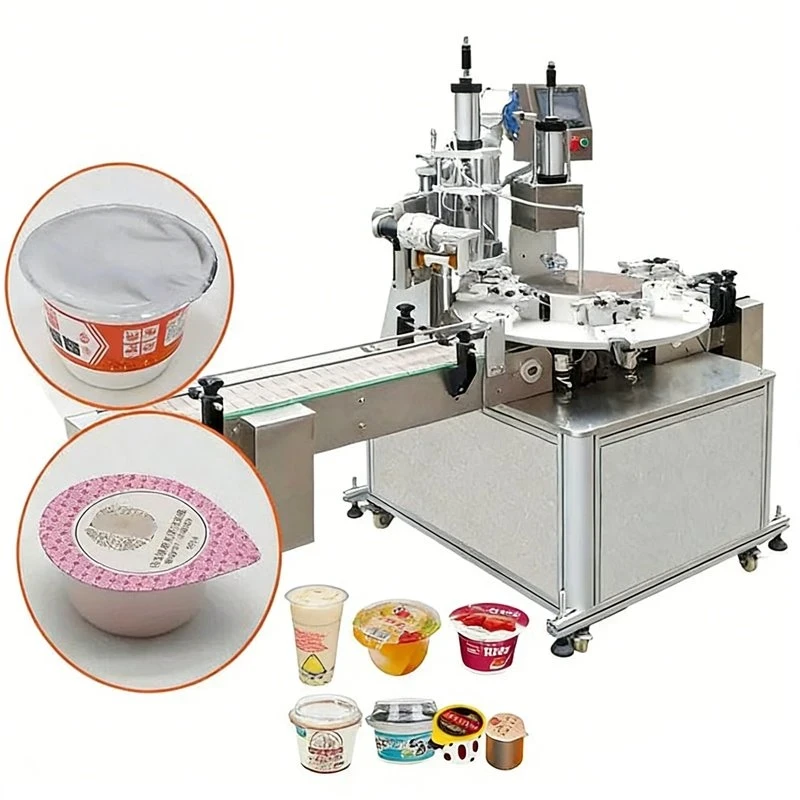
But is a rotary machine the right choice for your production line? How many filling heads do you need? And what should you confirm before requesting a quotation?
This guide explains the main considerations to help you make a more informed equipment decision.
What Is a Rotary Cup Filling and Sealing Machine?
A rotary cup filling and sealing machine is an automated packaging system that uses a rotating table or carousel to move containers through a series of working stations.
Instead of moving cups along a long straight conveyor, the machine positions them around a circular working area. Each station performs a specific operation, such as container feeding, product filling, film positioning or heat sealing.
Depending on the machine configuration, several operations can be integrated into one production cycle.
Rotary cup filling and sealing machines are suitable for a wide range of cup packaging applications, including:
Liquids & Semi-Liquids
Honey, sauces, creams, lotions and pastes.
Powders & Granules
Tea, coffee, granular products and dry ingredients.
Solid & Portion
Capsules, small solid products and pre-portioned ingredients.
Desserts & Frozen
Jelly, pudding, ice cups and frozen desserts.
The machine configuration must be selected according to the actual product and container. Product viscosity, filling behavior and sealing requirements can all affect the final setup.
Rotary vs. Linear Cup Filling and Sealing Machines
Rotary and linear machines mainly differ in how containers move through the production process.
A rotary machine uses a circular indexing table, while a linear machine moves containers along a straight production line.
Neither design is automatically better for every application.
Rotary Cup Filling and Sealing Machine
In a rotary system, cups are positioned on a rotating table and move between different stations. The circular layout brings multiple operations together within a relatively compact working area.
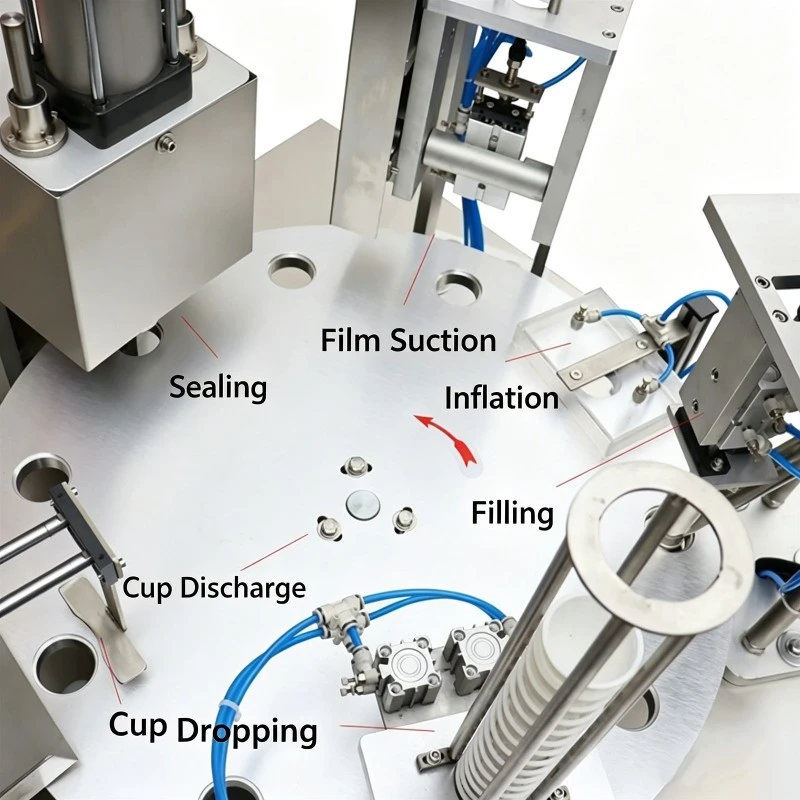
It can be a practical option when manufacturers need an integrated filling and sealing process without installing a long production line.
Typical considerations include:
- Compact equipment layout
- Integrated filling and sealing operations
- Customizable container and mold configurations
- Suitable for small to medium production requirements, depending on the model
Linear Cup Filling and Sealing Machine
A linear system moves cups forward along a straight conveyor or carrier plate. Multiple cups can be processed across several lanes at the same time.
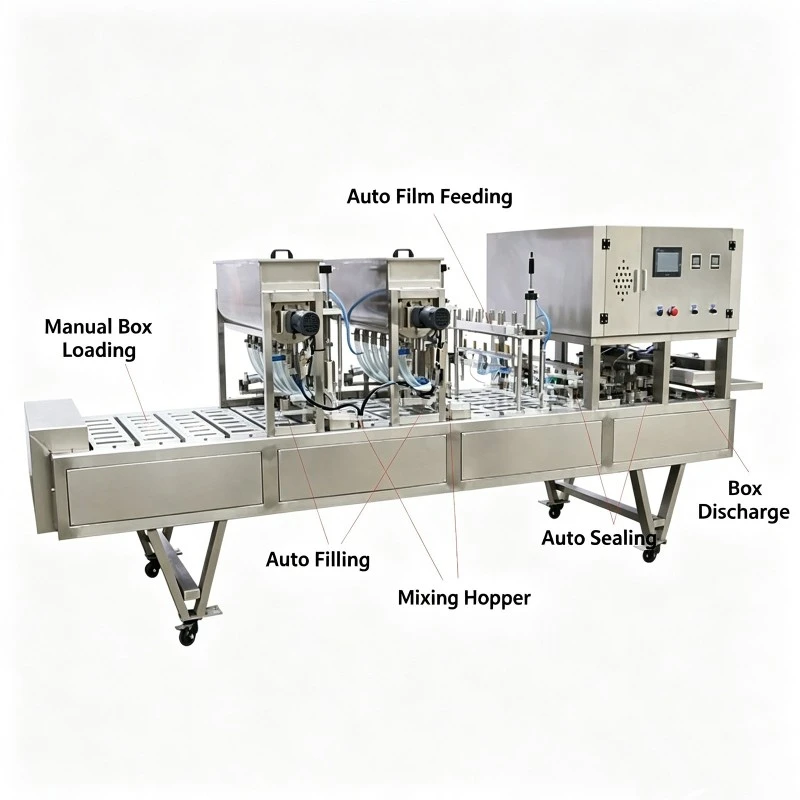
This layout can be suitable for larger production requirements where higher throughput and multiple parallel lanes are needed.
Typical considerations include:
- Multiple production lanes
- Potentially higher output for large-scale operations
- More room for additional processing stations
- Greater requirements for production floor space, depending on the line configuration
Key Differences
| Comparison | Rotary Machine | Linear Machine |
|---|---|---|
| Container movement | Circular rotation | Straight-line movement |
| Machine layout | Circular or carousel design | Conveyor or carrier-plate design |
| Production arrangement | Stations around a rotary table | Stations along a production line |
| Space requirements | Often more compact for integrated systems | Can require a longer layout |
| Production capacity | Depends on cycle speed and configuration | Can scale through additional lanes |
| Typical consideration | Integrated, flexible production | Higher-volume, multi-lane production |
For example, rotary cup filling and sealing machines generally operate at lower to medium production speeds, while linear machines can offer higher output capacities depending on their configuration.
But the best choice depends on your actual production target, available space, product characteristics, filling requirements and production schedule.
How Does an Automatic Rotary Cup Filling and Sealing Machine Work?
Step 1: Container Feeding
Empty cups or containers are positioned on the rotary table.
The feeding arrangement depends on the machine design and container format. Proper positioning is important because the container must remain aligned with the filling and sealing stations.
Step 2: Product Filling
The filling system dispenses a preset quantity of product into each container.
The dosing method should match the product's characteristics. For example, liquid products with different viscosities may require different filling systems.
The filling volume can be adjusted according to the required package size and product quantity.
Step 3: Film Feeding
A roll of compatible sealing film is fed into the machine and positioned above the filled container.
The film needs to match the container material and sealing surface. Its dimensions and sealing properties should be confirmed before production.
Step 4: Heat Sealing
The sealing mold applies controlled heat and pressure to bond the film to the container rim.
Sealing performance depends on the combination of sealing temperature, pressure, contact time, film structure and container material.
These settings should be confirmed through actual packaging tests rather than selected only from theoretical values.
Step 5: Finished Product Output
After sealing, the finished containers are discharged from the machine for inspection or the next packaging operation.
The complete process reduces the need for separate manual filling and sealing steps.
How Many Filling Heads Do You Need?
The number of filling heads is an important factor when configuring an automatic cup filling and sealing machine.
However, more filling heads do not always mean proportionally higher production output.
The actual output depends on how many containers are filled during each machine cycle, the cycle speed, the number of working stations and the overall machine configuration.
For example, a rotary machine may be configured with multiple filling heads to dispense product into several containers during the same working cycle.
Before choosing the number of heads, consider the following:
Target Production Capacity
Start with the number of finished cups you need to produce per hour or per shift.
01
Filling Volume
The required dose may affect the filling system and cycle time.
02
Product Characteristics
Different products may require different filling methods and nozzle arrangements.
03
Machine Configuration
Ask the manufacturer how the filling heads are arranged and how many containers are filled during each cycle.
04
For reference, INTY's current rotary cup filling and sealing machine page lists a customizable configuration with 1–4 filling heads and a stated production capacity of 20–40 cups per minute.
The final number of heads and achievable output should be confirmed according to the actual product, cup size and machine configuration.
How to Determine Production Capacity, Filling Volume and Container Siz
These three factors should be considered together rather than separately.
Production Capacity
First, calculate your actual production requirement.
For example, if your target is 12,000 cups per working day and you operate one 8-hour shift:
12,000 ÷ 8 = 1,500 cups per hour
This gives you a basic hourly production target.
However, the machine should not be selected using the theoretical output alone. Allow for actual operating conditions, including material loading, cleaning, product replenishment, changeovers and unexpected downtime.
Also confirm whether the supplier's quoted capacity refers to a tested production rate or a theoretical maximum.
Filling Volume
The required filling volume affects the dosing system and machine setup.
Before choosing a machine, confirm:
- Minimum and maximum filling volume
- Whether the filling volume needs to be adjustable
- Whether the product is thin, viscous or contains particles
- The required filling accuracy
Different dosing methods have different operating characteristics.
For example, gravity filling is generally more suitable for freely flowing, lower-viscosity products. Pump and piston filling systems can be considered for a wider range of product viscosities, depending on their design and application.
The most suitable filling method should be confirmed through a product test.
Container Dimensions
Container dimensions determine the size of the machine's positioning and sealing components.
Important measurements include:
Cup or container diameter
Container height
Opening diameter
Container shape
Sealing area dimensions
A round cup, square container and specially shaped package may require different positioning fixtures or sealing molds.
If you use multiple container sizes, ask whether the machine can accommodate different formats and what change parts are required for each size.
What Should You Confirm Before Buying?
Before requesting a quotation, prepare the following information. These details help the manufacturer evaluate the application and recommend a suitable machine configuration.
Product Information
- Product type: liquid, cream, paste or another formulation
- Product viscosity and flow characteristics
- Whether the product contains particles
- Required filling volume
Container Information
- Container material
- Container diameter and height
- Opening dimensions
- Container shape
Sealing Requirements
- Sealing film type: aluminum foil, Heat Sealing Film, plastic composite film or another suitable material
- Roll-stock film or pre-cut lids
- Required sealing area
- Special sealing or opening requirements
Production Requirements
- Target production capacity
- Required filling heads
- Daily working hours
- Container sizes and product types
- Available installation space
- Power and air supply requirements
Providing actual cup samples, product samples and sealing film samples can make the evaluation more accurate.
The manufacturer can then check the compatibility of the filling system, positioning molds and sealing components before confirming the final configuration.
INTY Rotary Cup Filling and Sealing Machine: Reference Specifications
INTY's rotary cup filling and sealing machine is designed for automated filling and heat sealing of customized cups, jars and other small containers.
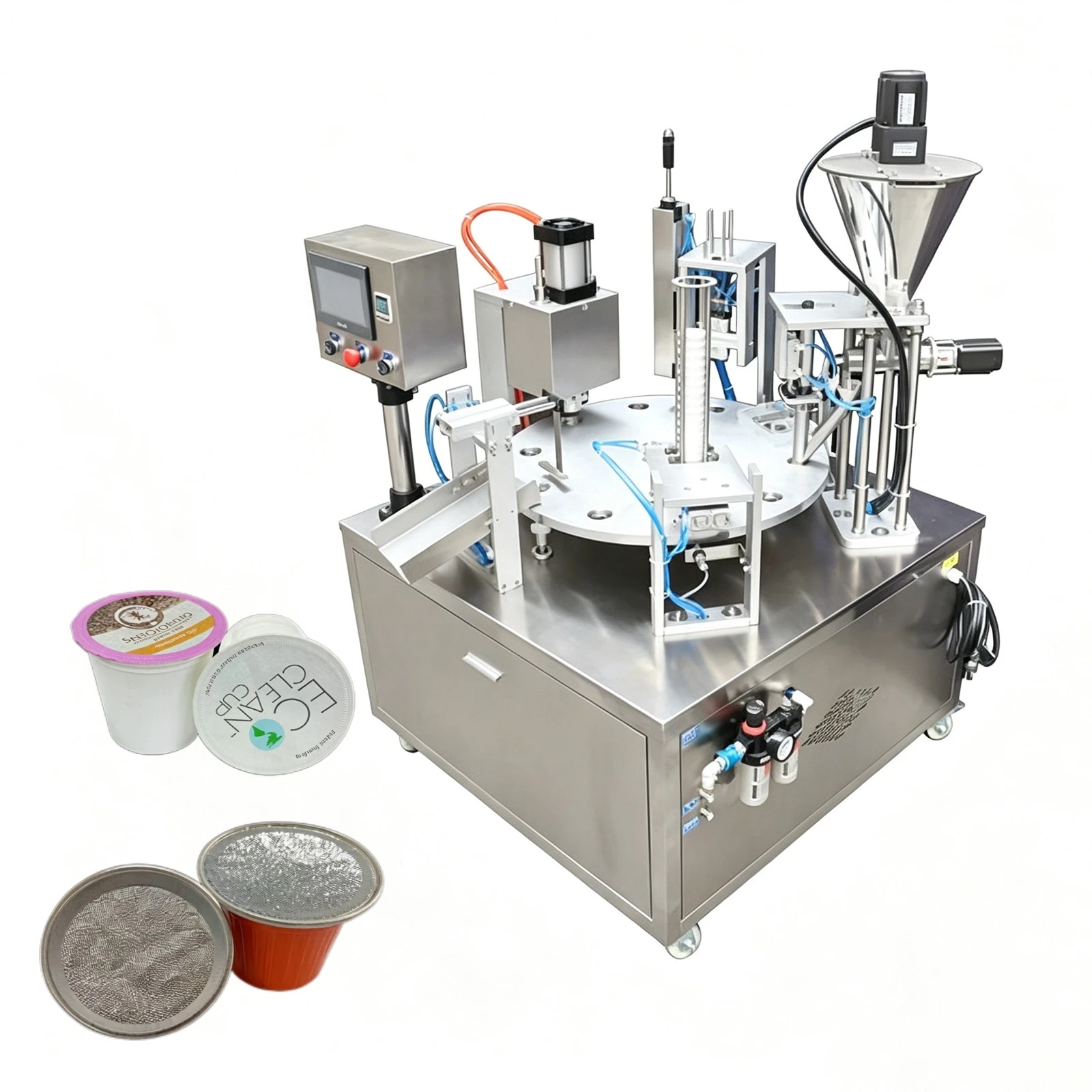
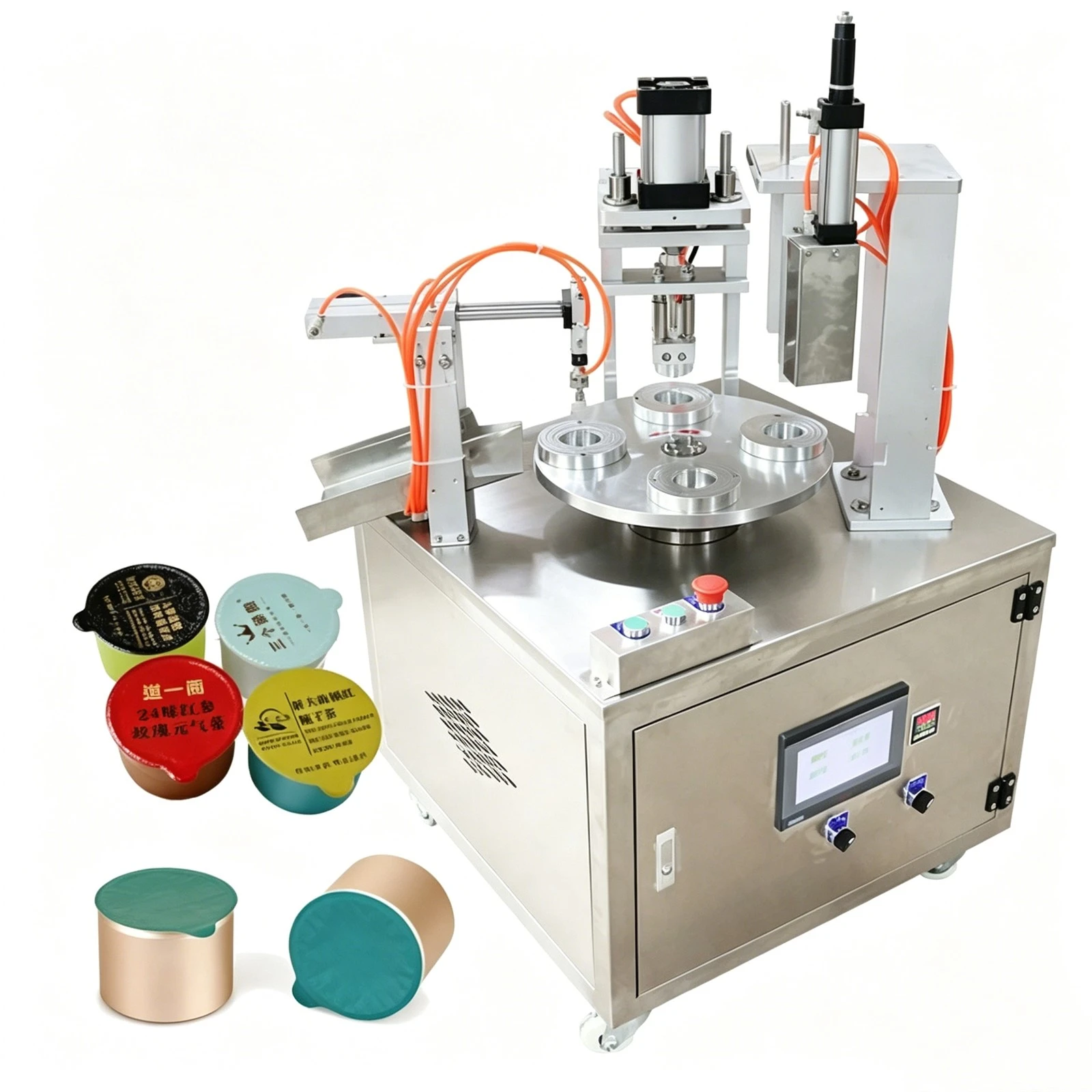
Filling &Sealing Machine
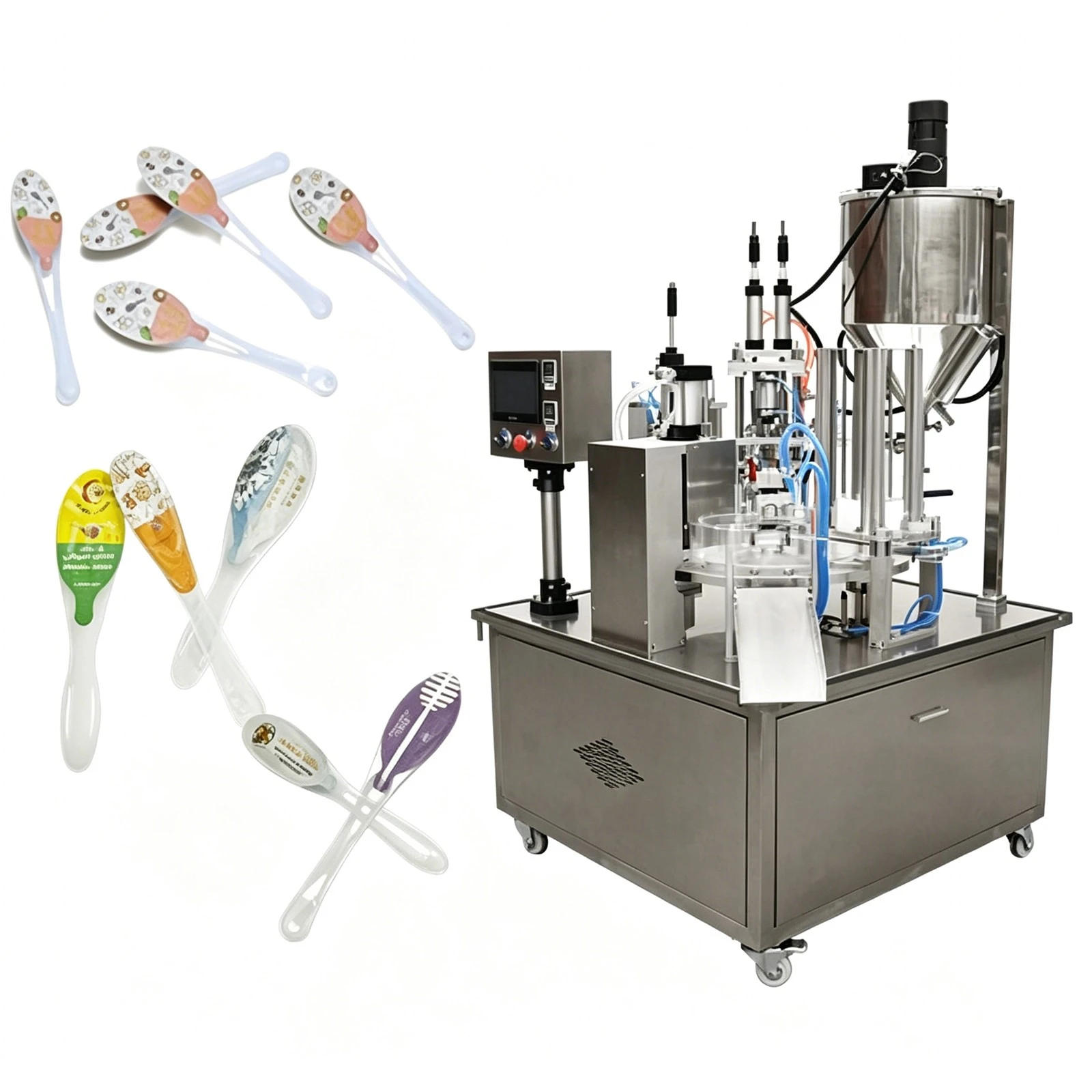
Filling & Sealing Machine
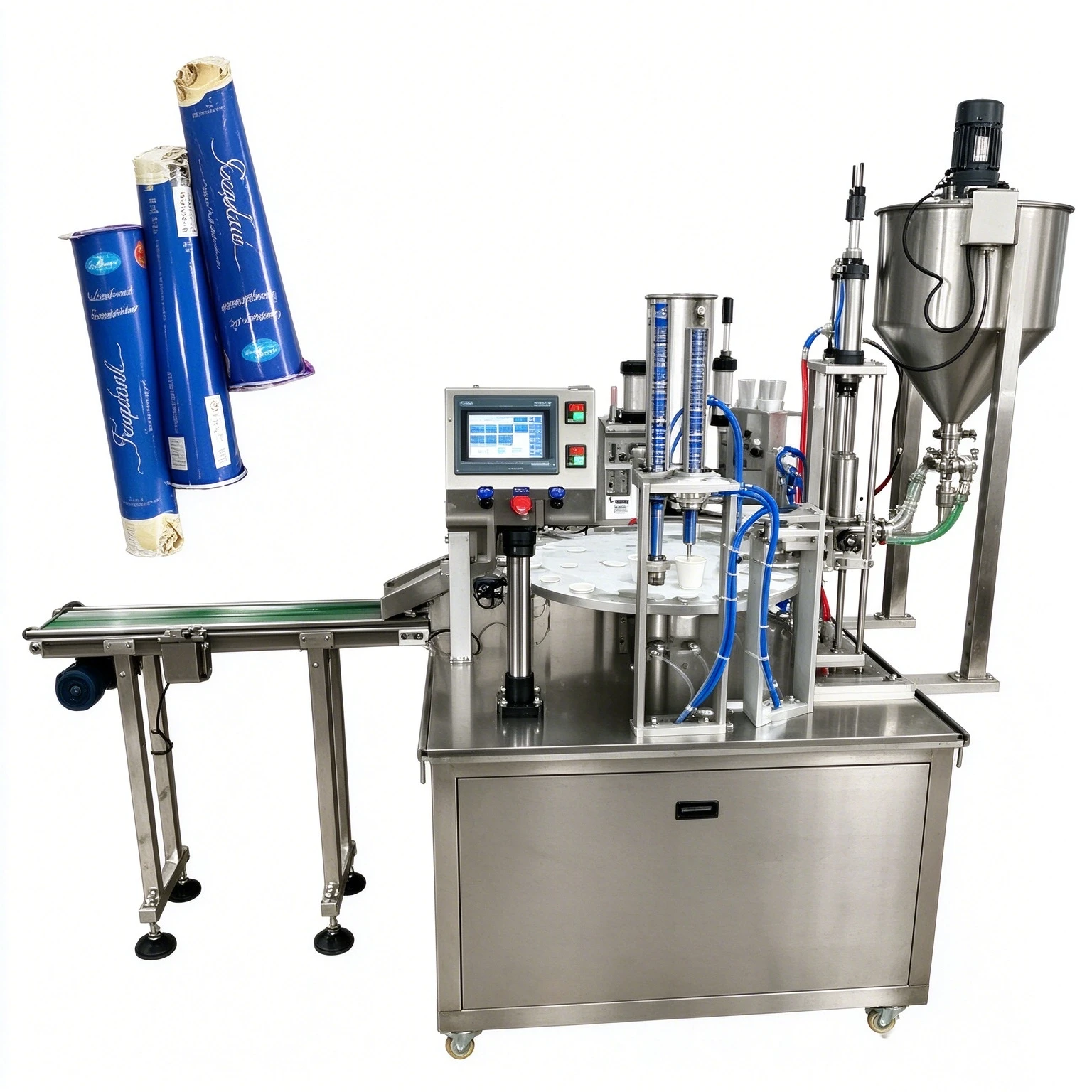
Filling & Sealing Machine
According to the current product specifications, the reference configuration includes:
| Parameter | Reference Specification |
|---|---|
| Machine model | XY-FS |
| Customization | Available |
| Power | 1–2 kW |
| Filling heads | 1–4 |
| Filling volume | 5–100 ml |
| Applicable container height | Customized |
| Container opening diameter | Customized |
| Production capacity | 20–40 cups/min |
| Filling accuracy | 99.9% (as listed on the product page; confirm test conditions) |
| Sealing method | Heat sealing with roll-stock materials |
| Filling material | Liquid or paste |
| Warranty | 1 year |
| Typical applications | Cosmetics and daily chemical products |
These are reference specifications for the listed model. The final machine configuration, output and filling performance should be confirmed based on the customer's actual product and packaging samples.
In addition to the machine, INTY can provide customized heat-sealing films and pre-cut sealing lids to match different container materials and sealing requirements.
Conclusion
Choosing an automatic rotary cup filling and sealing machine requires more than checking its advertised speed.
The key is to match the machine configuration with your product characteristics, filling volume, container dimensions, sealing material and production target.
A rotary system may be a suitable solution when you need an integrated filling and sealing process in a relatively compact layout. For larger production volumes requiring multiple lanes, a linear system may also be worth evaluating.
Before making a purchase decision, provide the machine supplier with your product details, container samples, sealing material and expected output. Testing the complete packaging process is the best way to confirm whether the proposed equipment meets your production requirements.
If you are planning to automate your cup filling and sealing process, INTY can help evaluate your packaging format and recommend a suitable machine configuration.
Frequently Asked Questions
What products can a rotary cup filling and sealing machine handle?
+
-
It depends on the filling system and machine configuration. Rotary machines can be designed for liquid and paste products, as well as other products with suitable flow characteristics. Product testing is recommended, especially for highly viscous products or formulations containing particles.
What is the difference between a rotary and a linear cup filling machine?
+
-
A rotary machine moves containers around a circular table, while a linear machine moves them along a straight production line. Rotary systems can offer an integrated and compact layout, while linear systems can accommodate multiple lanes for higher production requirements.
Does a rotary cup filling and sealing machine use pre-made cups?
+
-
Yes. The machine described in this guide is designed to fill and seal pre-made cups, jars and other small containers. The container positioning and sealing molds are configured according to the packaging format.
How do I know whether I need one, two or four filling heads?
+
-
Start with your target output, filling volume and product characteristics. Then ask the manufacturer how many containers the proposed configuration can fill during each cycle. The number of filling heads alone does not determine the final production capacity.
What samples should I provide before ordering?
+
-
Ideally, provide the actual product, empty containers and sealing film. These samples allow the manufacturer to evaluate filling performance, container positioning and sealing compatibility before confirming the machine configuration.


