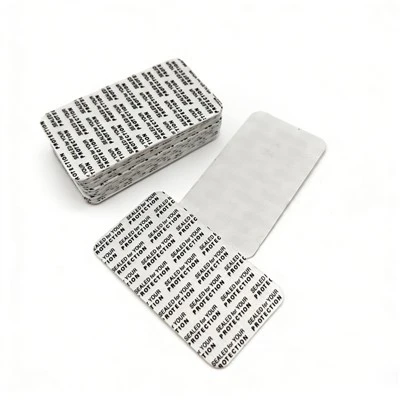
A protein powder customer installed an automatic punching machine two years ago and switched from pre-cut liners to roll stock. After a year, they ran the numbers and found their liner procurement cost had dropped by nearly twenty percent. But that doesn't mean everyone should do the same. Another customer-a small-batch sauce producer using maybe thirty or forty thousand liners a month-bought roll stock to save money, only to realize their production line had no punching equipment at all. They ended up outsourcing the cutting. By the time they factored in processing fees and material loss, the roll stock cost them more than pre-cut liners ever had.
So the answer to this question isn't about the liner itself. It's about where your production line stands right now. Have punching equipment and high volume? Go with roll stock. No punching equipment and smaller volume? Go with die-cut. Here's how to think through it.

Who Should Use Roll Stock?
Roll liners are liners that haven't been punched into individual discs yet. They're made from multiple layers of material, laminated together in a custom structure based on your product requirements, and supplied in continuous rolls. You feed them through your own punching machine on-site, cut them to the size you need, and place them into your caps.

The biggest advantage is price. Without the supplier's punching step, both material and labor costs come down. For production lines running hundreds of thousands or even millions of pieces a month, that difference adds up to something significant over a year. Roll stock also doesn't tie up the supplier's tooling resources, so lead times tend to be more flexible and replenishment is faster.

But roll stock comes with one clear prerequisite: you need punching equipment. And that equipment means a capital investment. If your volume is large and stable, that investment spreads out nicely-per unit, your real cost actually gets lower. There's another advantage that's easy to overlook: if your product specs change later and you need a different liner diameter, you only need to swap the cutting die. No new liner order, no back-and-forth with the supplier on new dimensions. That kind of flexibility has real long-term value.

That said, a punching machine needs maintenance. It needs someone trained to run it. Cutting accuracy directly affects sealing performance-if the discs are cut off-center or undersized, they won't sit properly in the cap. These hidden costs need to be calculated before you commit. Roll stock also works best when your product line has just one or two stable specs. If you're running many different sizes and changing lines frequently, every switch means re-adjusting both the punching machine and the sealing parameters. The advantage thins out quickly.
Who Should Use Die-Cut Liners?
Die-cut liners are finished product-already punched to your exact cap dimensions by the supplier. They arrive ready to use, no extra processing needed.

For companies without punching equipment, or those whose volume hasn't yet justified the investment, die-cut liners are the simpler choice. No cutting accuracy to worry about. No equipment to maintain. No extra step in the production line. What arrives from the supplier is exactly what goes into your caps, and the supplier takes responsibility for consistency.
Die-cut liners also offer more flexibility when your specs are still in flux. If you have multiple product lines with different cap sizes, or you're still in the market-testing phase where bottle dimensions might change, die-cut is far more agile. Order whatever diameter you need, whenever you need it. No need to build an entire equipment setup around a single liner size.
On price, die-cut liners cost more than roll stock because of the added punching step and labor. But you're saving on equipment investment and operating costs. For small to mid-size operations, that price difference is usually worth paying. If your volume is modest, forcing a switch to roll stock will likely cost more than it saves once equipment and waste are factored in.
Be used in a wide range of industries.
 Bulk Packaging

Strip Packaging
 Carton Shipping
How to Decide
Look at volume first
Under roughly a hundred thousand pieces per month, die-cut is almost always the more sensible choice unless you already own punching equipment. Above several hundred thousand per month, with stable specs, roll stock starts showing a clear cost advantage.
Look at your equipment
Do you have a punching machine? If not, the roll stock calculation needs to be redone. Machine cost, maintenance, operator training, and cutting waste all need to be spread across the true per-unit cost.
Look at your spec count
Running one liner size? Roll stock is easy to manage. Running four or five different diameters? Each one needs its own cutting die and setup time. The roll stock advantage gets diluted fast.
Look at future flexibility
If your product specs might change down the road, roll stock lets you swap a die and keep going. Die-cut means placing new orders at new dimensions. That long-term flexibility has value.
Summary
Have cutting equipment, high volume, stable specs? Roll stock pushes your costs down. No equipment, smaller volume, multiple specs? Die-cut keeps things simple and reliable. Neither option is universally better-the right choice depends on matching the format to where your production line actually stands right now.
If you're not sure, ask your supplier to quote both formats. For the roll stock option, add in machine cost, cutting die cost, and estimated waste, then spread the total across your per-unit calculation. The comparison you build yourself will be more reliable than any generic advice.
Frequently Asked Questions
We don't have a punching machine. Is it worth buying one to switch to roll stock?
+
-
Depends on your monthly volume. If you're consistently using several hundred thousand liners per month or more, the equipment investment usually pays for itself within a year or two. Below that, the payback period stretches out. Get quotes on both formats, price the machine, and do the math with your real numbers.
How difficult is it to operate a punching machine?
+
-
Basic operation isn't complicated, but it does require trained staff. The bigger challenge is maintaining cutting accuracy over time-dull dies and misaligned feeding mechanisms can produce off-spec discs that compromise sealing. If you don't have someone who can own the equipment maintenance, die-cut is the safer route.
What if our product specs change later?
+
-
With roll stock, you swap the cutting die to the new diameter and keep using the same roll material-as long as the liner structure stays the same. With die-cut, you'd place a new order at the new size. This is one of the underappreciated advantages of roll stock for growing brands.
Can we switch from die-cut to roll later?
+
-
Yes. Many customers start with die-cut during the product launch and market-testing phase, then switch to roll stock once volume stabilizes and they've invested in punching equipment. The liner structure can often remain the same-only the supply format changes.