


Tightening a bottle cap does not always guarantee a reliable seal.
A bottle may still leak during storage, transportation, or handling, even when the cap appears to be securely closed. In many cases, the problem is not simply how tightly the cap is applied. The liner inside the cap, its dimensions, and its compatibility with the container all play important roles.
Choosing the wrong liner can lead to poor adhesion, uneven contact with the bottle rim, or an ineffective induction seal.
Here are three common liner selection mistakes that can affect packaging performance.
1. Using Pressure-Sensitive Liners for Incompatible Liquid Products
Pressure-sensitive liners are designed to adhere to the container rim when the cap is tightened. They do not require an induction sealing machine or a separate heat-sealing process.
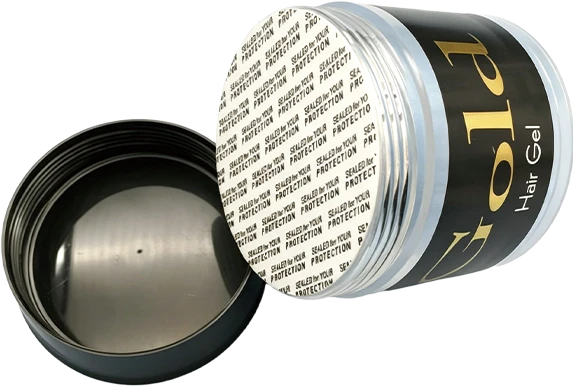
However, not every pressure-sensitive liner is suitable for every product.
For example, certain pressure-sensitive liner constructions may not provide reliable sealing performance for water-based liquids. Depending on the adhesive formulation, container material, product characteristics, and storage conditions, the liner may have insufficient adhesion or lose its sealing performance over time.
This can increase the risk of leakage, particularly when the package is exposed to transportation movement or changes in storage conditions.
What should buyers check?
Before selecting a pressure-sensitive liner, consider:
- Product type: Is the container used for dry solids, liquids, or other formulations?
- Container material: Is the bottle made of PET, PE, PP, or glass?
- Adhesive compatibility: Is the adhesive suitable for the container rim and intended application?
- Storage conditions: Will the product be exposed to heat, humidity, or extended storage?
- Actual sealing performance: Has the complete packaging combination been tested?
For water-based liquid products, buyers should not assume that a standard pressure-sensitive liner will provide a reliable seal. The liner structure and adhesive must be evaluated for the specific application.
2. Incorrect Liner Dimensions Can Cause Misalignment and Leakage
Even when the liner material is suitable, incorrect dimensions can create sealing problems.
A liner that is too small may not provide sufficient coverage of the bottle opening. A liner that is too large may fit poorly inside the cap or become displaced during handling and application.

Dimensional variation can also affect consistency. If the liner is not properly positioned inside the cap, it may sit unevenly against the bottle rim when the cap is tightened.
This can result in incomplete contact and increase the risk of leakage.
What should buyers check?
When confirming liner dimensions, pay attention to:
- Liner diameter: It should match the intended cap and bottle opening.
- Dimensional tolerance: Consistent cutting dimensions help maintain stable fitting.
- Cap interior dimensions: The liner must fit properly inside the cap without excessive movement.
- Bottle neck finish: The liner should cover the required sealing area of the bottle rim.
- Positioning: The liner should remain properly aligned during cap application.
Do not select a liner based only on the nominal diameter of the cap. The cap's internal structure and the bottle's neck finish also need to be considered.
For custom-sized liners, confirm the dimensions with actual cap and bottle samples whenever possible.
3. Choosing an Induction Seal Liner Without Matching the Bottle Material
Aluminum foil induction seal liners are commonly used to create a heat-sealed membrane across a container opening.
Unlike pressure-sensitive liners, induction seal liners require an induction sealing process. During sealing, the aluminum foil layer is heated by electromagnetic induction, allowing the compatible heat-seal layer to bond to the container rim.
A key factor is the compatibility between the liner's heat-seal layer and the bottle material.

For example, a liner designed for sealing to a PE container should not automatically be assumed to work with a PP or PET container. The heat-seal layer needs to be suitable for the target container surface.
Using an incompatible liner may result in weak bonding, incomplete sealing, or sealing failure.
What should buyers check?
Before ordering induction seal liners, confirm:
- Bottle material: PE, PP, PET, or another material.
- Liner structure: Does the heat-seal layer match the container material?
- Bottle opening: Are the dimensions and sealing surface suitable?
- Induction sealing conditions: Are the equipment settings appropriate for the liner and container combination?
- Sealing results: Has the finished package been checked for seal integrity and leakage?
Material compatibility is essential, but it is not the only factor. Induction sealing performance also depends on the equipment, sealing conditions, and the quality of the container's sealing surface.
How to Reduce the Risk of Bottle Leakage
Before confirming a liner order, buyers should evaluate the complete packaging system rather than considering the cap or liner separately.
A practical checklist includes:
- Identify the product being packaged and its physical characteristics.
- Confirm the bottle material and neck finish.
- Check the cap's internal dimensions.
- Select a liner structure suitable for the intended sealing method.
- Confirm liner diameter, thickness, and dimensional tolerance.
- Test the assembled packaging under relevant filling, storage, and transportation conditions.
For induction sealing applications, also verify the heat-seal layer and sealing equipment settings.
For pressure-sensitive applications, check adhesive compatibility and sealing performance with the actual product and container.
A small amount of testing before mass production can help identify compatibility or fitting problems before they affect an entire production batch.
Final Thoughts
A tightly closed cap does not necessarily mean a properly sealed package.
Leakage can be related to an unsuitable liner material, incorrect dimensions, poor positioning, or incompatibility between an induction seal liner and the bottle material.
The most reliable approach is to select the liner according to the product, container, cap design, and sealing method, then verify the result through sample testing.
At INTY, we support buyers in evaluating liner materials, dimensions, and customized structures for different packaging applications. Providing your bottle, cap, and product details can help us assess a more suitable liner solution.
Frequently Asked Questions
Can pressure-sensitive liners be used for water-based liquids?
+
-
Not all pressure-sensitive liners are suitable for water-based liquids. Their performance depends on the adhesive formulation, container material, product characteristics, and storage conditions. Compatibility testing is recommended before mass production.
Can an incorrectly sized liner cause bottle leakage?
+
-
Yes. A liner that is too small, too large, or incorrectly positioned may not make proper contact with the bottle rim, increasing the risk of leakage.
Do induction seal liners work with all bottle materials?
+
-
No. The heat-seal layer must be compatible with the container material. PE, PP, and PET containers may require different heat-seal layer specifications.
Does tightening the cap harder improve sealing performance?
+
-
Not necessarily. Excessive tightening cannot correct an incompatible liner, incorrect dimensions, or an unsuitable sealing structure. The cap, liner, and bottle must work together as a complete packaging system.
What information should I provide when requesting a liner quotation?
+
-
It is helpful to provide the product type, bottle material, bottle opening dimensions, cap dimensions, required liner structure, sealing method, and estimated order quantity. Samples or technical drawings can also help with evaluation.


