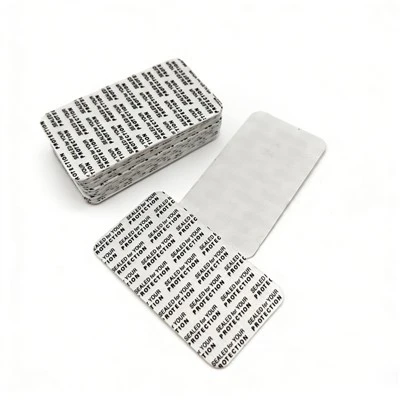
Let's start with a real-world headache: a batch of vitamin C effervescent tablets reaches the market, only to trigger a wave of complaints. The tablets turn yellow and sticky. Upon investigation, the formulation is fine-the problem traces back to the aluminum-plastic liner inside the cap. It looked the part, but failed to do its job. For anyone in pharmaceutical packaging design or procurement, this is the moment you realize: a liner is never just a standard accessory. Get it wrong, and you're looking at seal failures, regulatory holdups, or a full recall.
So where do things go wrong, and how can you get them right? Let's break it down into three things a liner actually does, four steps to verify quality, and one costly lesson from the procurement world.
It's Not Just "a Layer of Aluminum"-The Three Real Jobs of a Pharma Liner
1. Barrier: It' s Fighting Moisture, Oxygen, and Light, Not Just Closing the Bottle
Take effervescent tablets or amoxicillin granules. They are extremely moisture-sensitive. If the aluminum layer in the liner has pinholes or the composite structure is flawed, moisture seeps in. The powder clumps, the tablets fizz prematurely inside the bottle. A liner that looks intact but has poor barrier properties can silently kill a product's shelf life. For the people specifying and buying these liners, this means moisture protection isn' t a "nice-to-have"-it's the liner's primary job.

2. Compatibility: A Mismatched Structure Can Make Liner and Drug React
Aluminum-plastic liners are multi-layer composites: a heat-seal layer, the aluminum foil core, and an outer plastic layer. Here's the key: the layer that touches the drug must be chemically inert. If the structure is incorrectly designed-say, an inner layer meant for solid tablets is used in a syrup or gel-the drug and liner can react. It might not make headlines, but over time, active ingredients can adsorb onto the liner, or the liner itself can swell and lose integrity. For designers and buyers, the rule is simple: ask exactly which material touches the drug, and make sure it stays stable and non-reactive for the entire shelf life.

3. Tamper Evidence and Ease of Opening: Trust Without Frustration
A good liner should tell the patient, "This bottle is safe," and then get out of the way. A real example: an elderly patient struggles to open a bottle, uses a key to pry off the liner, and tiny foil fragments fall into the tablets. The medicine is now contaminated. This is a design failure. The liner must seal tightly enough to prevent tampering and leakage during shipping, yet peel off cleanly with reasonable force. For procurement and design teams, the peel force (opening force) is a number that deserves as much attention as any chemical spec. Too loose, and the seal fails. Too tight, and the complaints pile up.
▶ What does a well-designed liner actually feel like to open? Watch this.
Is This Liner Any Good? Don't Just Take Their Word-Four Checks You Can Run
When a supplier hands you a certificate and says "all tests passed," don't stop there. Here are four practical confirmation steps that separate a reliable liner from a future problem.
Step1
Confirm the Liner Structure with the Supplier
-Make Sure It's Fit for Pharma Use
Don't settle for "it's aluminum-plastic." Ask: what's the exact material of the heat-seal layer? Which side contacts the drug? A liner used for an oral liquid demands a different inner material than one for dry tablets.
If the supplier can't clearly name the layers and their specifications, that's your first red flag.
Step2
Confirm Certifications and Traceability
-Food-Grade Is the Floor, Pharma-Grade the Target
Ask for full third-party test reports from recognized labs (like SGS or a provincial drug control institute), tested against relevant standards. Also, insist on batch traceability. Every single liner batch must be traceable from the raw aluminum coil to the finished product package.
If a supplier can't provide batch-specific reports and traceability records, you have no way to manage quality or stability in the long run.
Step3
Seal Integrity-Test Samples Yourself
This is the most honest check. Request samples, seal them onto bottles, and do a dye penetration test. Submerge the sealed bottles in a dye solution, then check if any color has leaked inside the liner. It's visual, it's immediate, and it catches micro-leaks that a supplier's report might have missed.
Step4
Mechanical Performance-Test the Opening Force
Get a feel for how a real person opens it. There should be a defined range for peel strength. Too high, and you're creating user frustration; too low, and the seal might break during transport. Agree on an opening force range with the supplier during the design phase, and write it into your acceptance criteria.
A Procurement Lesson Learned the Hard Way-Cutting Costs with an Uncertified Supplier Cost a Whole Year
Here's a story that's been repeated in many procurement offices. A colleague wanted to reduce packaging costs and chose a small factory offering a great price on aluminum-plastic liners. The catch? The supplier didn't have the required drug packaging material registration number. When it came time for the drug product's regulatory association review, everything stalled. The registration was delayed by more than half a year. The money lost from that delay dwarfed the savings on the liner itself.
📕Price Vs Stability in Induction Seal Liners: The Hidden Costs Most Buyers Ignore
The takeaway is straightforward: in pharmaceutical packaging, unit price is a terrible sole criterion. You're buying consistency, compliance, and supply security. Look for:
- ISO certification or an equivalent quality management system.
- Consistent, batch-level third-party test reports, such as SGC test.
- Full traceability from raw material to finished liner.
If any of these are missing, the "cheaper" supplier is almost certainly more expensive in the long run.
Your Patient's Safety, Your Brand's Name
A liner isn't a commodity component-it's part of the drug. If it leaks, the drug fails. If it reacts, the drug becomes unsafe. Every extra hour spent on liner selection and supplier qualification is an investment in patient safety and brand protection.
If you're currently choosing liners or troubleshooting seal problems, it helps to talk with a technical team that can walk you through structure design, compliance data, and practical testing. The right conversation early on can save you from becoming the next cautionary tale.
Everything You Need to Know
Aluminum-plastic liners all look pretty much the same. How do you quickly tell a good one from a bad one?
Use this three-step quick screen. Step one: ask the supplier to clearly tell you what each layer is made of and which layer contacts the drug. If they can't give a straight answer, cut them. Step two: ask for full third-party test reports and batch traceability records. If they can't provide them, cut them. Step three: get samples and run your own dye penetration test and peel test. If there's leakage or torn residue, cut them. Similar appearance does not mean similar performance. These three steps will filter out most unqualified options.
What factors affect the cost of aluminum-plastic liners the most?
Four main factors. First, structure and material: specialized inner layers-such as corrosion-resistant or high-barrier formulations-cost more than standard materials. Second, size and thickness: larger diameters and thicker aluminum foil mean more raw material. Third, cleanroom grade: production in an ISO Class 8 (100,000-grade) cleanroom costs more than production in a standard environment. Fourth, testing and certification: if you need extractables and leachables studies or full third-party test reports, those costs will be reflected in the unit price. Pushing too hard on price often means the supplier has cut corners on materials or testing.
How should aluminum-plastic liners be stored? Do they have a shelf life?
Yes, they have a shelf life. The typical recommendation is to use them within one to two years, depending on the supplier's stated shelf life declaration. Three storage conditions matter most. Keep them away from light-UV exposure accelerates aging of the plastic layers. Keep them dry-while the aluminum layer isn't vulnerable to water itself, moisture between composite layers can affect heat-seal performance. Avoid heavy stacking-this prevents liner deformation that could compromise sealing flatness. Best practice: store by batch, follow first-in-first-out, and periodically spot-check the seal performance of inventory stock.
We're using an induction sealing machine, but the liner won't seal or the seal isn't strong enough. What could be the cause?
Several directions to troubleshoot. One, the liner itself: the heat-seal layer may be the wrong material or past its shelf life. Two, the bottle: the bottle lip may be uneven, have mold release residue, or be made of a material incompatible with the liner's heat-seal layer. Three, equipment parameters: insufficient induction power, too short a sealing time, or uneven pressure. Four, the liner may be placed upside down-the aluminum foil side should face up to receive induction heat, with the heat-seal layer facing down against the bottle lip. If you've ruled all of these out and the seal still fails, take the same batch of liners to your equipment supplier and run a cross-test to pinpoint whose variable is causing the problem.