


Choosing a suitable sealing liner is an important part of cosmetic packaging design. Whether the container holds face cream, lotion, serum, or nail gel, the liner inside the cap can influence sealing performance, product protection, and the overall user experience.
However, not all cosmetic containers require the same type of liner. Container material, product formulation, opening requirements, and packaging structure should all be considered before making a selection.
This guide introduces common sealing liners used in beauty and personal care packaging and explains how to choose the right option for different applications.
Why Do Cosmetic Jars and Bottles Need Sealing Liners?
Cosmetic packaging needs to do more than hold a product. It should help protect the contents,
reduce leakage risks, and provide a convenient opening experience.
A sealing liner is usually positioned inside a cap or closure. Depending on its structure and material, it can serve several purposes:
Sealing support:
Helps create contact between the closure and container rim.
Leakage prevention:
Helps reduce the risk of product leakage when the liner is properly matched to the container.
Product protection:
Certain structures, such as induction foil seals, provide additional barriers against moisture and oxygen.
Cushioning:
Foam liners can provide a soft contact layer between the cap and container.
Opening convenience:
Easy-peel and pull-tab designs can make package opening more convenient.
The right liner depends on the packaging system rather than the container alone.
Common Types of Sealing Liners for Cosmetic Packaging
Different cosmetic applications require different liner structures. Below are several common options.

PE foam liners are soft and resilient, providing cushioning between the cap and container rim. They are commonly used in cream jars and other cosmetic containers.
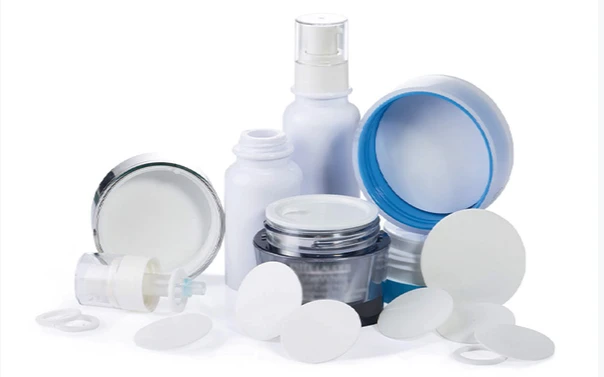
PS Foam Liners
PS foam liners are lightweight and cost-effective, with optional film lamination for different packaging requirements. They are suitable for general cream jar packaging.

These liners provide a bonded seal and enhanced moisture and oxygen barrier protection. Different sealing structures are available for PET, PE, PP, and glass containers.

Pressure-sensitive liners seal to the container rim via the pressure of a tightened cap-no sealing equipment needed. They can be used with compatible each containers for dry products, granules, and certain creams or low-flow formulations.

Designed for convenient opening, easy-peel induction seal liners allow consumers to remove the seal more easily. They are suitable for selected premium skincare and cosmetic packaging applications.

Installed inside pump and sprayer closures, these gaskets help prevent leakage and maintain sealing performance in lotion pumps, mist sprayers, and other dispensing systems
How to Choose a Liner for Different Cosmetic Products
The best starting point is to identify the product inside the container and the sealing function required.
| Cosmetic Application | Liner Options to Consider | Main Consideration |
|---|---|---|
| Face cream jars | PE foam or PS foam liners | Cushioning and cap-to-rim contact |
| Premium skincare jars | Easy-peel induction seal liners | Opening convenience and sealing requirements |
| Lotion bottles | Compatible aluminum foil induction seal liners | Barrier protection and container compatibility |
| Serum bottles | Aluminum foil induction seal liners | Product protection and seal integrity |
| Nail gel jars | Suitable resealable liner designs | Repeated opening and closing |
| Dry cosmetic powders or granules | Pressure-sensitive liners | Adhesion and container compatibility |
| Pump and spray bottles | Pump or sprayer gaskets | Leakage prevention at dispensing closures |
This table is a starting point rather than a fixed specification.
The final selection should be confirmed based on the container, product formulation, closure design, and actual filling and sealing conditions.
What Should You Consider Before Selecting a Liner?
Before requesting samples or placing an order, cosmetic packaging buyers should confirm several important details.
01
Container Material
The container material is one of the first things to check.
Common materials include:
- PET
- PE
- PP
- Glass
For induction sealing, the liner's sealing layer must match the container material. A liner designed for one type of plastic should not automatically be assumed suitable for another.
02
Product Formulation
Consider whether the container holds a cream, lotion, serum, gel, powder, or granulated product.
Different formulations have different requirements for sealing, barrier protection, and compatibility with packaging materials.
For example, a liquid serum may require a different sealing solution from a general face cream jar.
03
Opening and Resealing Requirements
Think about how consumers will use the product.
- Is the package opened only once before regular use?
- Does the first opening require a removable seal?
- Does the product need to be resealed after opening?
- Is convenient opening an important part of the packaging experience?
These questions help determine whether a standard foam liner, induction seal, easy-peel design, or resealable structure is more appropriate.
04
Cap and Container Dimensions
The liner should match the cap's internal dimensions and the container's opening.
Important information includes:
- Container opening diameter
- Cap inner diameter
- Neck and rim design
- Available liner thickness
- Required liner shape
For special packaging designs, customized die-cut liners may be considered.
05
Testing Before Mass Production
Even when a liner appears suitable based on its material and dimensions, testing is necessary.
We recommend confirming:
- Liner fit inside the cap
- Sealing performance
- Leakage resistance
- Peel or opening behavior, where applicable
- Compatibility with the actual cosmetic formulation
Sample testing helps identify potential issues before mass production.
New Sealing Designs for Beauty Packaging
As cosmetic packaging continues to develop, brands and packaging suppliers may explore different liner structures
to meet specific product requirements.
Several additional designs can be considered for beauty and personal care packaging.

Resealable Liners for Nail Gel Packaging
Nail gel containers may require a liner that can be opened and resealed during repeated use.
A resealable liner design can provide an additional sealing option for nail gel jars. Its repeated-use performance should be evaluated with the actual container and formulation.

Vented foam liners combine a foam layer with a venting structure.
They are designed for packaging applications where controlled air exchange is required. Their suitability should be evaluated according to the product's formulation, storage conditions, and packaging requirements.
They should not be treated as a replacement for a conventional liquid-tight seal without application testing.

Square ring pull liners offer an alternative pull-tab format for opening sealed containers.
Their distinctive shape provides another option for packaging designs where a visible and convenient opening feature is desired.
The liner structure and sealing compatibility should be confirmed for the intended container.
Frequently Asked Questions
What type of liner is commonly used for cosmetic cream jars?
+
-
PE foam and PS foam liners are common options for cosmetic cream jars. The choice depends on cushioning requirements, cap design, and packaging specifications.
Can induction seal liners be used for PET, PE, and PP cosmetic bottles?
+
-
Yes, suitable induction seal structures are available for PET, PE, and PP containers. However, the sealing layer must match the container material, and actual sealing tests are recommended.
Are pressure-sensitive liners suitable for cosmetic packaging?
+
-
They can be considered for plastic and glass containers. Their suitability depends on the adhesive, container surface, product formulation, and required sealing performance.
What is the difference between a foam liner and an induction seal liner?
+
-
Foam liners mainly provide cushioning and contact between the cap and container rim. Induction seal liners use heat generated by an induction process to create a bonded seal on a compatible container opening. They serve different packaging functions.
Can cosmetic jar liners be customized?
+
-
Yes. Liner dimensions, material structures, thicknesses, and certain surface finishes can be customized according to the packaging design and application requirements. Sample evaluation is recommended before mass production.
Conclusion
Selecting the right sealing liner is an important step in developing reliable cosmetic packaging.
From PE and PS foam liners for cream jars to induction seal liners for liquid skincare bottles, pressure-sensitive liners, and specialized resealable designs, each structure serves a different purpose.
The most suitable choice depends on the complete packaging system, including the product, container, cap, and sealing requirements.
At INTY, we support customers with sealing liner options, customized specifications, sample preparation, and application discussions. Contact our team to discuss your cosmetic packaging requirements and find a suitable sealing solution.


