


PE foam liners and pressure-sensitive liners are both used inside packaging caps, but they work in different ways and serve different sealing purposes.
A PE foam liner uses the compression and recovery properties of foam to provide cushioning and help create a close fit between the cap and container opening. A pressure-sensitive liner, on the other hand, has a pre-applied adhesive layer that sticks to the container opening when the cap is pressed into place.
The right choice depends on your packaging requirements, container material, product type, and whether you need an adhesive seal or a compression-based liner.
In this guide, we compare their structures, working principles, advantages, and applications to help you choose a suitable liner for your packaging.
What Is a PE Foam Liner?
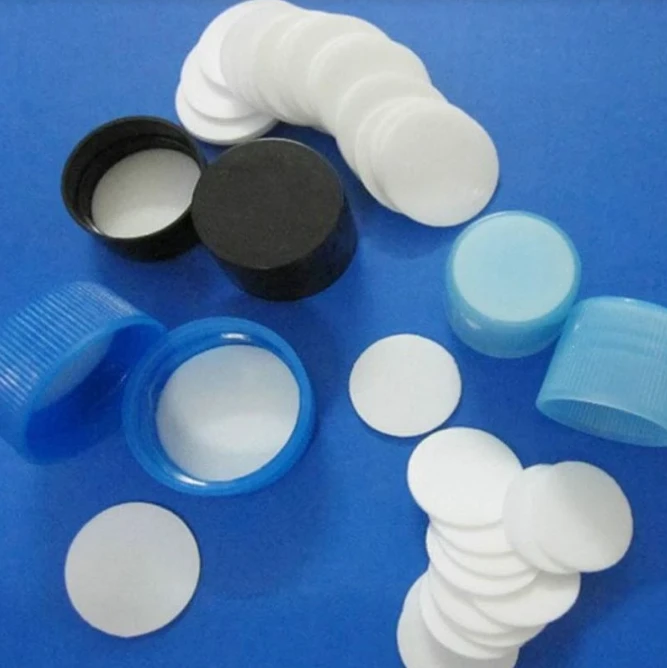
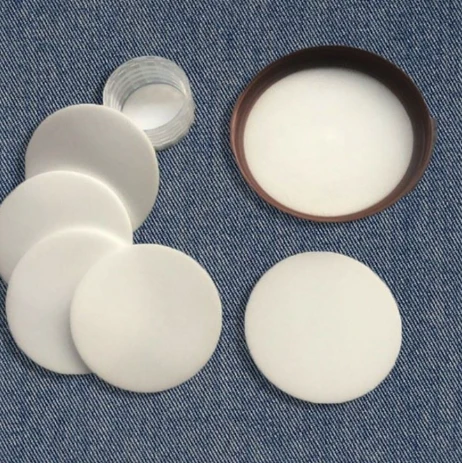
A PE foam liner is a cushioning and sealing component made from polyethylene foam, commonly supplied as die-cut discs or rings for placement inside bottle caps and closures.
For packaging applications, expanded polyethylene (EPE) foam is often used because of its lightweight structure, flexibility, and compression recovery.
When the cap is tightened, the foam compresses against the container opening. Its ability to recover helps maintain contact between the liner and the neck finish, providing cushioning and supporting a close fit.
PE foam liners can be customized in different thicknesses, diameters, shapes, densities, and lamination options.

Key Features of PE Foam Liners
- Compression recovery: Helps the liner adapt to the container opening when the cap is tightened.
- Cushioning: Provides a soft protective layer between the cap and container.
- Moisture and chemical resistance: Offers resistance to moisture and many common chemicals, depending on the material and application.
- Flexible customization: Available in different thicknesses, shapes, densities, and laminated constructions.
- Single- or double-sided lamination: Optional PE or PET film coatings can be selected according to application requirements.
Common Applications
PE foam discs and rings are commonly used in:
- Daily chemical packaging, such as detergent and body wash bottles
- Cosmetic and personal care containers
- Pump heads and dispensing closures
- Plastic bottles and jars requiring cushioning or a close-fitting cap liner
For applications requiring liquid-tight or leak-resistant packaging, the complete cap, liner, and container combination should be tested. A foam liner should not automatically be considered a hermetic seal.
What Is a Pressure-Sensitive Liner?
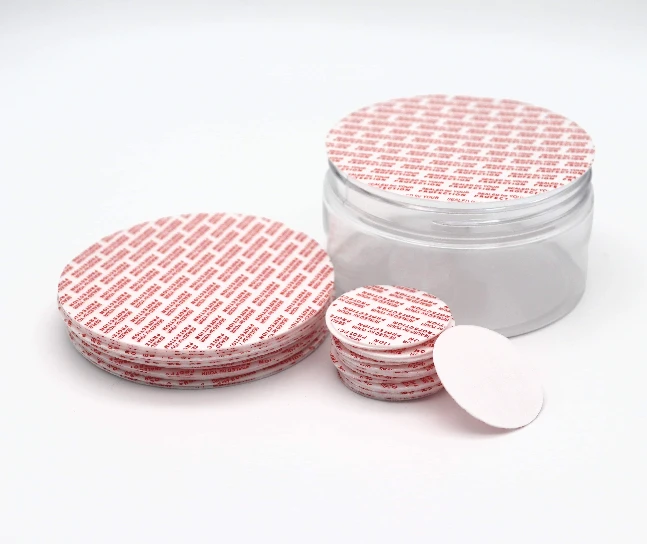
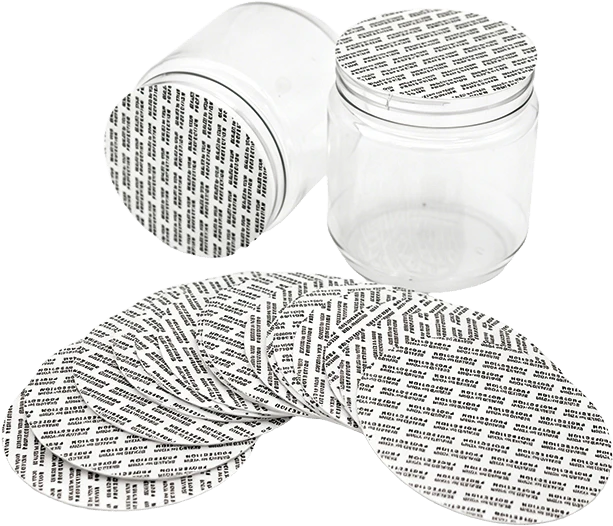
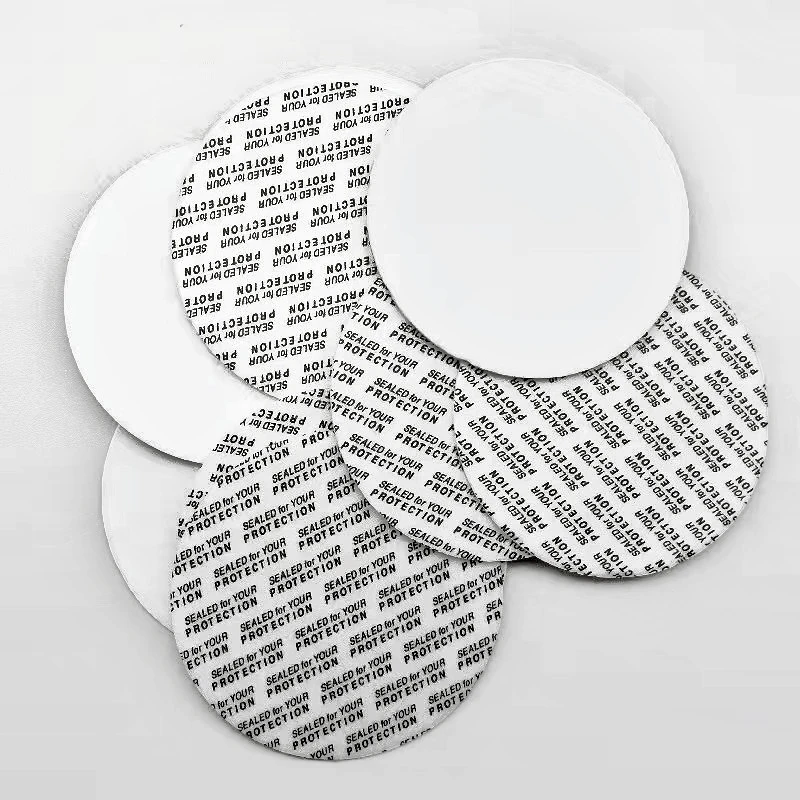
A pressure-sensitive liner is a self-adhesive cap liner with a pre-applied adhesive layer. It is designed to stick to the container opening when pressure is applied during cap tightening.
Unlike induction seal liners, pressure-sensitive liners do not require an induction sealing machine or heating process. The liner is placed inside the cap, and the adhesive bonds to the container opening under pressure.
A typical pressure-sensitive foam liner may include several layers:
- Anti-stick adhesive layer
- Printed surface
- PS foam layer
- Sealing adhesive layer
The foam layer provides cushioning, while the adhesive layer enables the liner to adhere to the container opening.
Key Features of Pressure-Sensitive Liners
- No sealing equipment required: No induction sealer or heating process is needed.
- Easy application: The liner is pressed against the container opening during cap tightening.
- Reliable adhesion: Provides an adhesive seal when used with compatible container surfaces and suitable application conditions.
- Clean removal: Designed for clean peeling with minimal adhesive residue under suitable conditions.
- Customizable construction: Available in different diameters, shapes, printing options, and material combinations.
Common Applications
Pressure-sensitive foam liners are suitable for selected packaging applications involving:
- Dry goods
- Creams and certain paste-like products
They can be used with compatible PET, PE, PP, PS, glass, and metal containers, subject to adhesive compatibility and sample testing.
Important application limitation: Pressure-sensitive liners are not recommended as a general solution for powders, free-flowing liquids, high-viscosity glues, or corrosive products. For these applications, induction seal liners or heat-sealing liners may be more appropriate.
PE Foam vs. Pressure-Sensitive Liners: Key Differences
Although both products may contain foam materials, their sealing mechanisms are different.
| Comparison | PE Foam Liner | Pressure-Sensitive Liner |
|---|---|---|
| Main material | PE / EPE foam | PS foam with adhesive layers |
| Sealing method | Compression and close contact | Pressure-activated adhesive bonding |
| Adhesive layer | Not required in a standard foam liner | Pre-applied adhesive |
| Equipment required | No special sealing equipment | No special sealing equipment |
| Main function | Cushioning and supporting a close fit | Adhesive sealing on the container opening |
| Thickness | Customizable | 1.2 mm standard product specification; customizable |
| Shape | Round, ring, or customized | Round, square, or customized |
| Lamination | PE or PET coating; single or double-sided | Printed and adhesive-layer construction |
| Typical applications | Caps, pump heads, daily chemical packaging | Selected dry goods and cream packaging |
| Key selection factor | Compression, recovery, and cap fit | Adhesion, surface compatibility, and product type |
The Main Difference: Compression vs. Adhesion
The most important difference is how the two liners interact with the container opening.
A PE foam liner relies on mechanical compression. When the cap is tightened, the foam is compressed against the bottle neck and helps maintain contact through its cushioning and recovery properties.
A pressure-sensitive liner relies on adhesive bonding. When the cap is tightened, the sealing adhesive contacts the container opening and adheres to its surface.
Therefore, these products should not be selected based on material thickness or appearance alone. Their working principles and intended applications need to be considered.
Which Liner Is Better for Your Application?
Neither option is universally better. The suitable choice depends on what you need the liner to do.
Choose PE Foam Liners If:
- You need cushioning between the cap and container.
- Your packaging requires a compression-based liner.
- You need different foam thicknesses or densities.
- You want single- or double-sided laminated foam.
- Your application involves caps, pump heads, or daily chemical containers.
PE foam liners are particularly useful when cap fit, cushioning, and compression recovery are important.
Choose Pressure-Sensitive Liners If:
- You need an adhesive liner without using an induction sealing machine.
- Your packaging contains suitable dry goods or selected cream products.
- You want the liner to adhere directly to the container opening.
- You need a convenient application process with no heating equipment.
- Your container material is compatible with the selected adhesive.
Pressure-sensitive liners can simplify the sealing process for suitable applications, but adhesive compatibility and product conditions must be verified before mass production.
What If You Need a Stronger Seal for Liquid Products?
If your packaging contains liquid products, powders, or other applications unsuitable for pressure-sensitive liners, consider an induction seal liner or a heat-sealing liner instead.
These sealing methods use heat to bond a compatible sealing layer to the container opening. The appropriate option depends on the container material, product characteristics, sealing equipment, and required performance.
How to Choose the Right Cap Liner
Before selecting a liner, consider the following factors:
1. Container Material
Identify whether your container is made of PET, PE, PP, PS, glass, or metal. Different materials have different surface characteristics and sealing requirements.
For pressure-sensitive liners, adhesive compatibility with the container surface is especially important.
2. Product Type
Consider whether the container holds dry goods, creams, liquids, powders, or chemical products.
The product contents may affect the suitability of the adhesive, foam material, and sealing method.
3. Cap and Container Dimensions
Measure the inner diameter of the cap and the outer diameter of the container opening. The liner should fit properly inside the cap and make appropriate contact with the sealing area.
4. Required Liner Thickness and Structure
For PE foam liners, consider thickness, density, compression, and lamination requirements.
For pressure-sensitive liners, consider the foam thickness, adhesive construction, liner diameter, and printing requirements.
5. Application and Performance Testing
Before mass production, test the liner with the actual cap and container.
Check liner fit, adhesion or compression performance, ease of application, removal behavior, and sealing integrity under the intended storage and transportation conditions.
A sample test is especially important when changing container materials, cap designs, or product formulations.
Frequently Asked Questions
Are PE foam liners and pressure-sensitive liners the same?
+
-
No. PE foam liners mainly rely on compression and recovery to provide cushioning and support a close fit. Pressure-sensitive liners have a pre-applied adhesive layer that bonds to the container opening under pressure.
Do pressure-sensitive liners require an induction sealing machine?
+
-
No. Pressure-sensitive liners do not require induction heating equipment. They are applied by placing the liner inside the cap and tightening the cap to create adhesive contact with the container opening.
Can PE foam liners be laminated with PET film?
+
-
Yes. Depending on the application, PE foam liners can be supplied with PE or PET film coatings, including single-sided or double-sided lamination.
Can pressure-sensitive liners be customized?
+
-
Yes. Pressure-sensitive liners can be customized in diameter, shape, printing, and other construction details. The available options depend on the application and production requirements.
Can pressure-sensitive liners be used for powders or liquid products?
+
-
They are not recommended as a general solution for powders or free-flowing liquids. For these applications, induction sealing or heat sealing may be more suitable.
Conclusion
PE foam liners and pressure-sensitive liners serve different purposes in packaging.
PE foam liners are designed for cushioning, compression recovery, and close-fitting cap applications. Pressure-sensitive liners provide an adhesive sealing solution without requiring induction heating equipment.
The right choice depends on the container material, product contents, cap design, and required sealing performance.
If you are unsure which liner is suitable for your packaging, testing samples with your actual bottle and cap is the best way to evaluate compatibility before mass production.
Looking for a suitable cap liner? I
NTY provides customizable PE foam discs and rings, as well as pressure-sensitive foam liners for different packaging requirements.
Contact our team with your bottle, cap, and product details to discuss a suitable solution.


