


Choosing the right sealing liner for a bottle or container isn't as simple as picking whatever fits. The wrong liner can mean leaks, spoilage, or a production line that won't run. This guide breaks down the three main sealing technologies and the two structural formats buyers encounter most often.
How it works:
An induction seal liner contains a layer of aluminum foil. When the capped bottle passes under an induction sealing machine, the machine generates a high-frequency electromagnetic field. This field induces eddy currents in the aluminum foil, heating it rapidly. The heat melts the polymer heat seal layer, bonding the foil to the bottle rim. Once cooled, you have a hermetic, tamper-evident seal.
Compatible bottles:
PET, HDPE, PP, and other plastic bottles, as well as glass bottles. The key requirement is that the bottle rim material must match the liner's heat seal layer formula.
Equipment required:
An induction sealing machine - either manual or inline automatic. Without it, the liner will not activate.
Best suited for:
Products that need long shelf life, oxygen/moisture barrier, or tamper evidence. Common in pharmaceuticals, nutraceuticals, foods, and cosmetics.
How it works:
A pressure sensitive liner is coated with a sticky adhesive on one side. When the cap is screwed onto the bottle, the liner presses against the bottle rim and adheres. No heat, no electromagnetic field, no equipment needed.
Compatible bottles:
Essentially any bottle - plastic, metal, or glass. Because the seal relies on mechanical pressure and adhesive rather than a chemical bond to a specific material, it is highly versatile.
Equipment required:
None. The cap torque does the work.
Best suited for:
Dry solids (powders, capsules, tablets), products that cannot tolerate heat, or operations without induction sealing equipment. Also a common solution when induction sealing fails due to metal interference from the cap or bottle.
How it works:
Heat sealing film is a rollstock or die-cut material that is sealed to a container using a heat sealing machine. The machine applies direct heat and pressure to bond the film to the container's rim.
Compatible containers:
PP bottles and cups, metal cans, and certain trays. The container rim must be heat-seal compatible.
Equipment required:
Best suited for:
Cup and tray sealing, cans, and applications where induction sealing is not practical. Common in food packaging, dairy, and ready-to-eat products.
Once you've chosen induction sealing, the next decision is structure.
One-piece liner:
The entire liner - foil, heat seal layer, and backing - transfers to the bottle rim when the cap is removed. The seal surface is flat and clean, with no residual backing left in the cap. Aesthetically, the sealed bottle mouth looks neat and uniform. Common for single-serve products and applications where appearance matters.
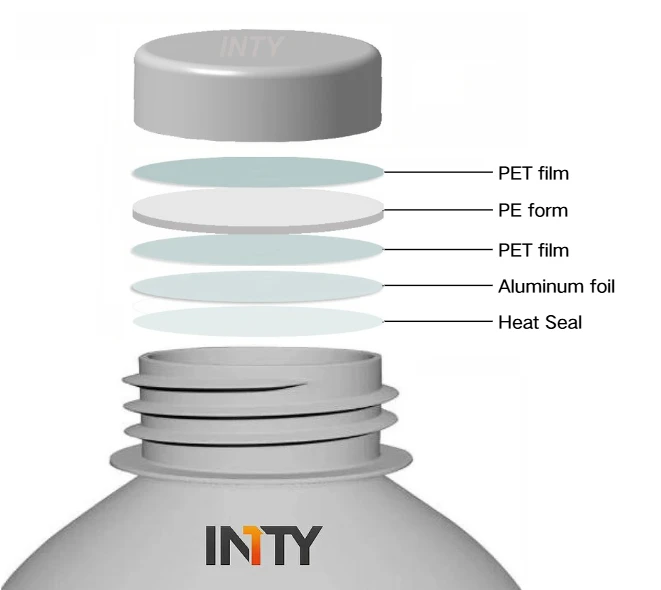
Two-piece liner:
The foil layer seals to the bottle rim, but the backing (foam or pulp) remains inside the cap after opening. This backing provides a secondary seal each time the cap is screwed back on, helping reduce leaks and oxygen ingress during use. Common in pharmaceuticals (OTC drugs) and chemicals where reseal protection is important.
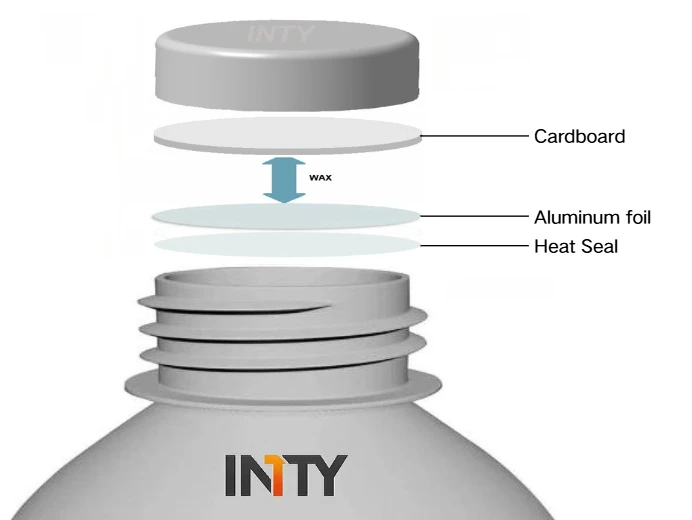
Key Selection Factors
| Factor | What to check |
|---|---|
| Bottle material | PE, PP, PET, glass - the heat seal layer must match |
| Product type | Liquid, powder, capsules, corrosive chemicals - each has different liner requirements |
| Sealing method | Induction (needs machine), pressure sensitive (no machine), heat sealing (needs machine) |
| Shelf life needs | Longer shelf life usually requires induction or heat seal for barrier properties |
| Reseal requirement | Two-piece induction liners provide reseal backing; one-piece does not |
| Regulatory compliance | FDA, EU food contact, PPWR - especially for food/pharma markets |
About INTY
INTY is an export-oriented sealing packaging manufacturer specializing in aluminum-plastic sealing solutions. We produce one-piece and two-piece induction foil seal liners, pressure sensitive liners, and heat sealing films for PET, HDPE, PP, and glass containers.
Our facility operates in a 5,000+ sqm food-grade dust-proof environment with ISO 9001, HACCP, and BRCGS certifications. Raw materials and finished products undergo SGS testing to confirm compliance with FDA and EU requirements.

Advanced Equipment

Lamination Workshop

Welding Workshop

Die-Cutting Workshop
Not sure which liner fits your bottle? Send us your samples - we'll test, recommend options, and provide video confirmation before you order. Or request free samples for your own evaluation.
Frequently Asked Questions
What's the difference between an induction seal liner and a pressure sensitive liner?
+
-
An induction seal liner uses an induction sealing machine to generate heat, bonding the aluminum foil to the bottle rim for a hermetic, tamper-evident seal. A pressure sensitive liner adheres through mechanical pressure when the cap is tightened - no equipment required. Induction is better for liquids needing long shelf life; pressure sensitive suits dry products and operations without sealing equipment.
Can I use a pressure sensitive liner for liquids?
+
-
Pressure sensitive liners are primarily designed for dry solids - powders, capsules, and tablets. For liquids, induction seal liners or heat sealing films typically provide better barrier performance. However, specific formulations may vary; consult the liner supplier for your application.
What is the difference between one-piece and two-piece induction liners?
+
-
A one-piece liner transfers entirely to the bottle rim when opened, leaving a flat, clean seal surface. A two-piece liner leaves the backing (foam or pulp) inside the cap, providing a secondary seal each time the cap is replaced. One-piece is common for single-use products; two-piece for products needing reseal protection.
How do I know which liner is right for my bottle?
+
-
Send us your bottle samples with caps and tell us about your product. Our technical team will evaluate the bottle material, neck finish, and product requirements, then recommend suitable options. We provide testing videos and free samples for your evaluation before you order.
Are samples free?
+
-
Yes. We offer free samples for customer evaluation. You can also send us your bottles and we will prepare samples with our recommended liner options for testing. Contact our sales team to arrange delivery.


