


You've built a skincare brand. Or a supplement brand. The formula is locked in. The bottle is chosen. But that liner inside the cap-you still haven't figured it out. Buy standard stock? You're worried it won't match your bottle mouth and the seal will fail. Find a factory in China to custom-make it? You don't know where to start, you're afraid of miscommunication, and you're afraid of paying for a batch of useless liners.
This guide is written for exactly that stage. No fluff. Just a practical walkthrough of the entire process of getting custom packaging liners manufactured in China-from the perspective of a small brand owner. What to do at each step, what to ask, what to watch for.
Step 1: Figure Out What You Need-Define Your Specs
Before contacting any supplier, get clear on the following. You don't need a professional technical document, but the supplier will definitely ask:
Bottle mouth dimensions.
Provide the diameter of your current liner, or measure the inner diameter of your cap and report it to the supplier. Or, even easier-mail a few bottle and cap samples and let the supplier match them for you.
One detail worth knowing: a perfect-fit liner is usually slightly larger than the cap's inner diameter, so it sits snugly inside the cap without falling out or shifting around. If you're not confident measuring dimensions, sending physical samples is the least error-prone way.

Bottle material.
Plastic? Metal? Glass? Different materials require different liners. PET bottles and PE bottles need different heat seal layers. Metal cans and glass jars are different again. Don't leave this out.

PET/PP/HDPE bottle/container
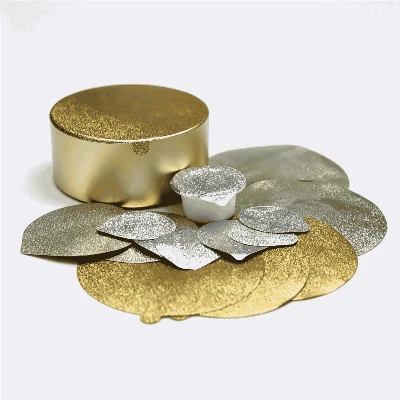
Metal jar/can

Glass bottle/container
Cap type.
What material? What style? Screw cap, flip-top, or press-on cap? The internal clearance of the cap directly determines liner thickness.
Product type.
Liquid, powder, paste, or tablets? This determines the inner layer material of the liner. Oil-based products and dry powders have completely different requirements. Corrosive products are different again.
Opening experience.
How do you want consumers to open this product? Easy peel? Keep the tamper-evident trace? Do you want a pull tab design? If you're making supplements for elderly users, easy-open is a must. If it's industrial lubricant, easy-open matters far less.

Single-piece induction liners with bait

Lift N Peel Heat Induction Foil seals
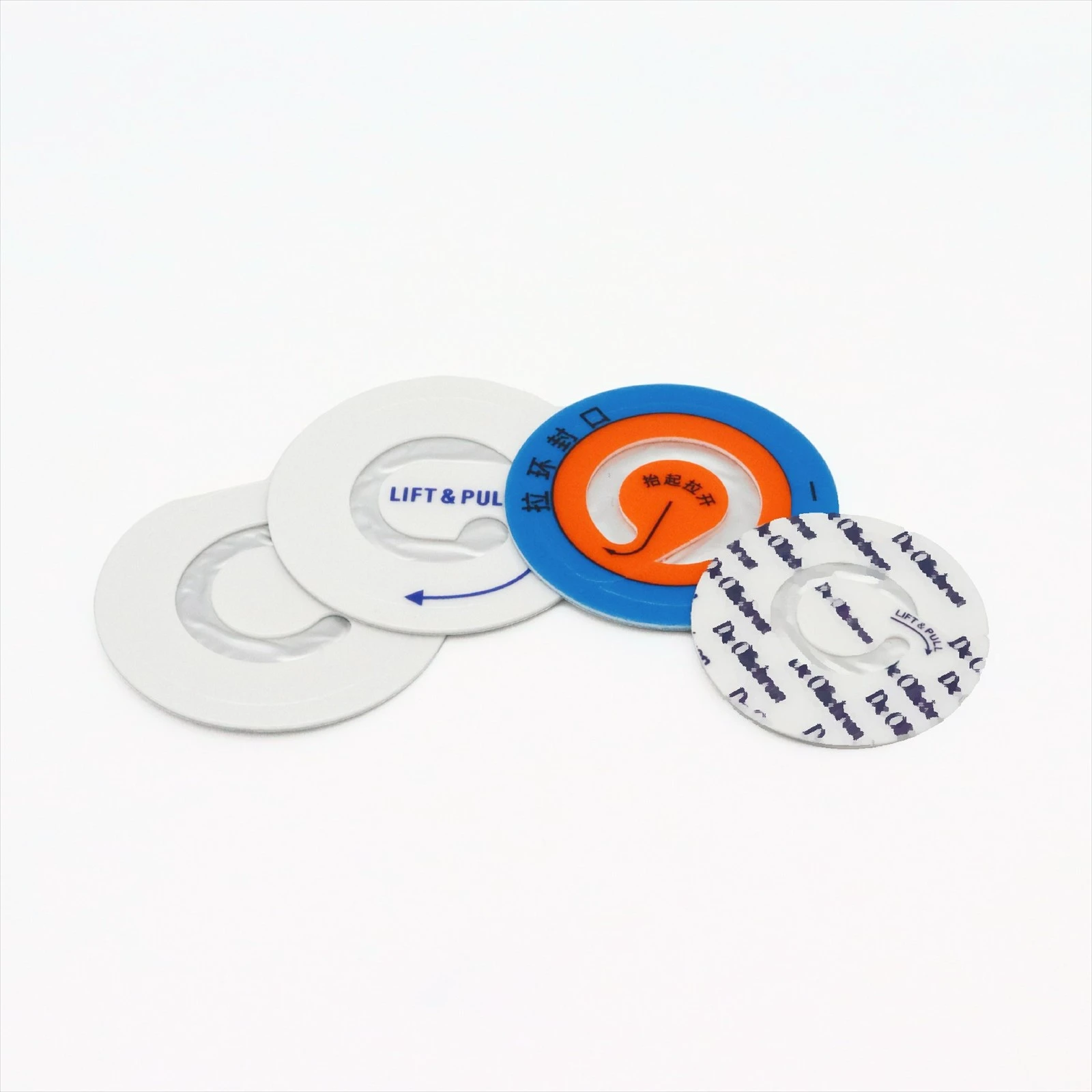
Ring Peel Induction Seals
Quantity needs.
What's your estimated annual volume? How many pieces in the first batch? This number affects pricing and MOQ negotiation.
If you haven't fully figured out all of these yet, don't worry. Write down what you know and let the supplier fill in the rest. A good factory will ask about things you haven't thought of-not just do whatever you say.
Step 2: Find the Right Supplier-Don't Just Compare Prices
Finding a supplier is easy. Finding the right one is harder. The most common mistake small brands make is price comparison-whoever is cheapest wins. But in the packaging liner category, the number on a quote only tells you "how much to make it." It doesn't tell you "how much hassle you'll have after it's made."
A qualified supplier should have three things:
Certifications.
FDA food contact compliance, BRCGS packaging certification, ISO quality management systems-these aren't decorations. They mean the factory's quality management system has been audited and has the foundation for stable supply. INTY Industrial, for example, holds FDA and BRCGS certifications. For brands doing export or working in food and supplements, this is a hard requirement.

Customization capability.
Ask: what liner structures can you make? Can you customize to my bottle mouth dimensions? Can you print my logo? What's the MOQ? Standard materials typically start at 50,000 pieces, but first trial orders can often be negotiated. Many factories-including us-are willing to lower the threshold so brands can validate in small batches first.

Custom pressure-sensitive pads/liners

Custom heat-sealing film gaskets

Custom vented induction seals
Communication responsiveness.
How quickly do they reply to emails? Can they answer technical questions? Do they proactively ask about your product type, bottle material, and sealing requirements? If a salesperson only says "yes," "no problem," "price is negotiable" but never digs into technical details, be cautious. Liners aren't generic products. A supplier who doesn't understand your product will most likely deliver something you can't use.
Step 3: Request Samples-Never Skip This Step
No matter how good the quote looks, no matter how persuasive the salesperson sounds, without samples, nothing counts.
After receiving samples, do three things:
Run a production line trial.
Take the samples to your filling line (if you're not in mass production yet, work with a contract manufacturer or ask the supplier for help) and run them with your actual bottles and actual sealing parameters. This step immediately reveals whether the liner matches the bottle mouth and whether the seal is even.
Run leak tests.
Invert the sealed bottles, shake them, drop them from one meter a few times-check for leaks. If possible, run high and low temperature tests to simulate shipping conditions. These tests don't need professional equipment; they can be done right on the production line.
Have real people peel them.
Find a few target consumers and have them open the liners by hand. Is it hard to peel? Is there residue left behind? Does the experience feel right? Plenty of liners pass seal performance tests but fail on user experience.
If samples don't pass, don't rush to switch suppliers. Send the test results back and see if they can adjust. A supplier that can improve based on feedback is one worth keeping.
Step 4: Compliance Documents-Sort Them Out Before You Order
Small brands often overlook this step. They assume "place order, pay, receive goods" is the end of it. Then the product needs to be exported, listed on an e-commerce platform, or cleared through customs-and suddenly a pile of compliance documents is needed.
FDA compliance.
If your product ships to the US market, or your e-commerce platform requires food contact material proof, the liner needs FDA-related testing.
ISO/BRCGS certification.
This is the international standard for packaging materials, proving the factory's quality management system meets retailer-recognized levels. Many European and US brand owners require this certification from their suppliers.
Test reports.
Heavy metals, PFAS, migration testing-what your target market requires, confirm before placing the order. Don't wait until goods arrive at the port to discover the paperwork is incomplete.
One hard-earned insight: a supplier's attitude toward compliance documents tells you a lot about how professional they are. A proper factory will proactively provide documents before you ask, or at least clearly tell you "these can be done, these need extra testing." If they're vague, or promise "we have everything" but never produce anything, be careful.
Step 5: Quality Control-Don't Discover Problems When the Goods Arrive
There can be a whole production line's worth of variables between a small trial order and full production. For your first mass production run, do a few things:
Sign-off samples.
Use the approved trial sample as the golden standard and confirm with the factory that mass production follows the sign-off standard. Keep one copy on each side. If disputes arise, refer back to the sign-off sample.
Third-party inspection.
If you're not confident in the supplier's QC, commission a third-party inspection company to check goods before shipment. The cost is modest but can catch obvious problems early.
Batch reports before shipment.
Require the factory to provide a certificate of analysis for each batch, covering at least dimensions, seal performance, and appearance. Keep these reports for traceability and future quality maintenance.
Summary: The Process Isn't Complicated-Finding the Right Partner Is
Getting custom packaging liners made in China as a small brand comes down to five steps: define specs, find a supplier, request samples, confirm compliance, and manage quality. None of the steps are hard. What's hard is having someone willing to work through the details with you at every step.
INTY Industrial makes this simpler: direct factory pricing with no middleman markup, FDA and BRCGS certifications so you're not chasing compliance documents, full customization and sampling support, and negotiable MOQs for first trial orders. What small brands fear most isn't the MOQ number-it's not even getting a chance to try. We'd rather let you test first, then decide.

If you're planning custom packaging liners, contact us directly. Bring your bottle mouth dimensions and product information. We'll help you sort out the specs, samples, and compliance documents step by step.
Frequently Asked Questions
What's the minimum order quantity for custom liners?
+
-
For standard materials, MOQ typically starts at 50,000 pieces. However, first trial orders can often be negotiated lower. INTY are willing to reduce the threshold so small brands can validate in small batches before committing to larger volumes.
Do I need to send my bottles and caps to the supplier?
+
-
It's highly recommended. Physical samples give the supplier exact dimensions, material details, and cap clearance information. This eliminates measurement errors and speeds up the matching process. If you can't send samples, provide detailed drawings with precise measurements.
What certifications should I look for in a Chinese liner supplier?
+
-
At minimum, look for FDA food contact compliance, BRCGS packaging certification, and ISO 9001 quality management. If you're exporting to the EU, also ask about PPWR compliance testing. A supplier who proactively provides these documents is a good sign.
Can I print my brand logo on the liner?
+
-
Yes. Custom printing on the foil surface is standard practice for many brands-logos, opening instructions, tamper-evident messaging. Discuss your design requirements during the sampling phase. Printing adds a small cost per unit but significantly improves brand presentation.
How do I protect myself from quality issues in mass production?
+
-
Three things: sign-off samples (both sides keep one), third-party pre-shipment inspection if needed, and batch-specific certificates of analysis from the factory. These three together give you clear reference points if anything goes wrong.


